Classic Game Theory Scenarios in Combat
Famous game theory examples translated into martial arts contexts. Learn how strategic principles apply directly to fighting situations.
The Striker's Dilemma
Based on the famous Prisoner's Dilemma, this scenario shows why two rational fighters might fail to reach the best collective outcome.
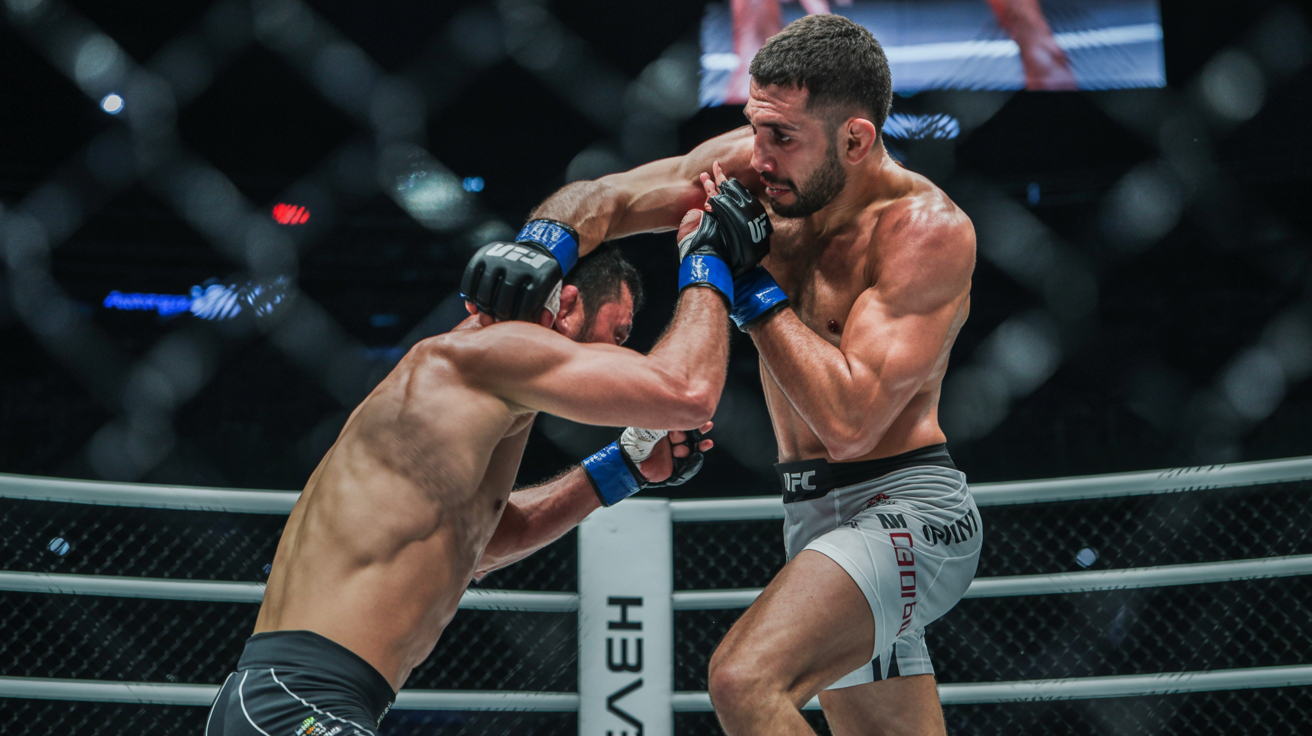
The Scenario
Two MMA fighters are facing off. Both are skilled strikers and grapplers. Each must decide:
Option A: Technical Fight (Cooperate)
Keep the fight standing, use clean technique, let the best striker win. This creates an exciting fight that fans love, leading to bigger future paydays for both fighters.
Option B: Wrestling Heavy (Defect)
Immediately shoot for takedowns and grind out a decision. Less exciting, but higher chance of winning if your opponent stays standing.
| Fighter B: Technical | Fighter B: Wrestling | |
|---|---|---|
| Fighter A: Technical | Both get 50/50 win chance + Exciting fight + Big future payday | A loses, B wins A gets taken down B grinds decision |
| Fighter A: Wrestling | A wins, B loses A grinds decision B gets controlled | Both wrestle, 50/50 Boring fight Lower future pay |
The Nash Equilibrium
Both fighters wrestle. This is the Nash Equilibrium because:
- • If Fighter A thinks Fighter B will wrestle, A should wrestle too (or get dominated)
- • If Fighter A thinks Fighter B will stand, A should wrestle (guaranteed win)
- • Same logic applies to Fighter B
Result: A boring wrestling match that hurts both fighters' future earning potential.
The Lesson
Individual rationality leads to a collectively worse outcome. This is why:
- ✓ Fight contracts include "Fight of the Night" bonuses
- ✓ Promoters reward exciting fighters with better matchups
- ✓ Repeated interactions (future fights) encourage cooperation
- ✓ Reputation matters in martial arts
In a repeated game (career of fights), fighters learn to "cooperate" for mutual benefit.
The Brawler's Game (Chicken Game)
The Scenario
Two aggressive strikers square off. Neither wants to be seen as backing down, but both risk getting knocked out if they're too reckless. Each must decide:
Option A: Aggressive Pressure (Escalate)
Walk forward throwing bombs, refuse to back down. High risk of knockout but also high reward if opponent flinches.
Option B: Defensive Counter (De-escalate)
Fight smart, move laterally, counter-strike. Safer but might be seen as "running" if opponent is aggressive.
| Fighter B: Aggressive | Fighter B: Defensive | |
|---|---|---|
| Fighter A: Aggressive | WORST: Both get hurt Reckless brawl Both risk knockout | A dominates A pressures B backs up |
| Fighter A: Defensive | B dominates B pressures A backs up | Boring stalemate Both wait Low action |
Nash Equilibria (Two of Them!)
Unlike the Striker's Dilemma, this game has two pure strategy equilibria:
- Equilibrium 1: Fighter A aggressive, Fighter B defensive
(Neither wants to change—A dominates, B survives) - Equilibrium 2: Fighter A defensive, Fighter B aggressive
(Neither wants to change—B dominates, A survives)
The question is: WHO will escalate, and WHO will de-escalate?
Real-World Application
This is why psychological warfare matters:
- ✓ Reputation: Known brawlers force opponents to be defensive
- ✓ Intimidation: Trash talk and staredowns establish dominance before the fight
- ✓ Early aggression: Setting the tone in Round 1 matters
- ✓ Adaptability: Champions switch between aggression and defense
Real Example:
Mike Tyson's early career relied on this principle—his reputation made opponents defensive before the bell even rang.
The Sparring Coordination Game
The Scenario
Two training partners need to decide the intensity level for their sparring session. Both want to match each other's intensity to avoid injury or awkwardness.
| Partner B: Light (50%) | Partner B: Hard (90%) | |
|---|---|---|
| Partner A: Light (50%) | Good: Flow sparring ✓ Work technique Build cardio | Bad: Mismatch A gets hurt Trust broken |
| Partner A: Hard (90%) | Bad: Mismatch B gets hurt Trust broken | Good: Competition sim ✓ Realistic prep Test skills |
The Coordination Problem
This game has two equally good equilibria:
- • Both go light → Good technical work
- • Both go hard → Good competition prep
The problem is coordinating which one to choose. Mismatched intensity causes injury and resentment.
Solution:
Clear communication before sparring. "Light technical today" or "Full comp prep, let's go hard." Coordination through explicit signals prevents the mismatch.
The Striking Triangle (Mixed Strategies)
The Scenario
A striker faces a defender in close range. Three options exist, like rock-paper-scissors:
🥊 Strike
Beats: Grab attempt (can't close distance)
Loses to: Block (strike absorbed)
🛡️ Block
Beats: Strike (absorbs damage)
Loses to: Grab (exposed while blocking)
🤼 Grab
Beats: Block (clinch secured)
Loses to: Strike (caught moving in)
No Pure Strategy Nash Equilibrium
There's no single "best" move because:
- • If you always strike, opponent will block
- • If you always block, opponent will grab
- • If you always grab, opponent will strike
The Mixed Strategy Equilibrium
The solution is to randomize your actions in a specific probability distribution:
Optimal Strategy:
- • Strike 33% of the time
- • Block 33% of the time
- • Grab 33% of the time
(In reality, probabilities depend on payoffs, but the principle is the same)
By remaining unpredictable, you prevent your opponent from exploiting a pattern.
This Is Why Champions Are Unpredictable
Elite fighters like Anderson Silva, Jon Jones, and Israel Adesanya constantly vary their attacks, making it impossible for opponents to develop a consistent counter-strategy.
The School Owner's Dilemma
A Business Version of the Prisoner's Dilemma
Scenario: Two Competing Schools
You and a competitor run martial arts schools in the same neighborhood. You both face a strategic choice:
- Cooperate: Keep prices reasonable, focus on quality instruction, collaborate on community events
- Defect: Slash prices drastically, run aggressive marketing campaigns, poach each other's students
| Competitor Cooperates (Reasonable Prices) | Competitor Defects (Price War) | |
|---|---|---|
| You Cooperate (Reasonable Prices) | Both schools thrive You: $15k/month profit Competitor: $15k/month profit | You lose students You: $5k/month profit Competitor: $20k/month profit |
| You Defect (Price War) | You win short-term You: $20k/month profit Competitor: $5k/month profit | Both schools suffer You: $8k/month profit Competitor: $8k/month profit |
⚠️ The Temptation (Defect while they Cooperate)
If they keep prices high and you undercut them, you can steal their students and make $20k/month. Very tempting!
📉 The Worst Outcome (Both Defect)
But if you both slash prices, quality suffers, margins disappear, and both schools barely survive at $8k/month. This is the "race to the bottom."
✅ The Best Mutual Outcome (Both Cooperate)
If both maintain reasonable prices and focus on differentiation (you specialize in kids, they focus on competition fighters), both schools stay profitable at $15k/month.
🎯 Game Theory Solution
This is a repeated game—you'll compete with this school for years. The optimal strategy is:
- 1. Start by Cooperating: Set reasonable prices and focus on quality
- 2. Tit-for-Tat Strategy: If they start a price war, match it temporarily to protect market share
- 3. Signal Willingness to Cooperate: After matching, return to reasonable pricing to invite them back to cooperation
- 4. Differentiate, Don't Compete: Specialize in different niches so you're not direct competitors
Real World: Many successful martial arts school owners explicitly avoid price competition with nearby schools, instead focusing on unique value propositions and community collaboration. Everyone profits more when they cooperate.
Key Takeaways for Martial Artists
1. Understand the Game
Recognize whether you're in a Prisoner's Dilemma (cooperation vs. defection), Chicken Game (escalation vs. backing down), or Coordination Game (matching strategies).
2. Use Mixed Strategies
Remain unpredictable. Randomize your techniques and timing so opponents can't exploit patterns.
3. Reputation Matters
Your past behavior influences opponents' expectations. Build a reputation strategically—aggressive, technical, or adaptive.
4. Adapt to Context
Competition requires different strategies than training. One-shot encounters differ from repeated games. Adjust your approach accordingly.